
Review of data for a set objective
- What could be the objective?
- Integrity (Audit and Forensics purposes)
- Is the data accurate and complete
- Has anyone tempered with the data
- Evidence of patterns (Improvement and Investigations)
- Studying the data for trends
- What can we learn to improve our work
The process for data analysis can be summarized as follows
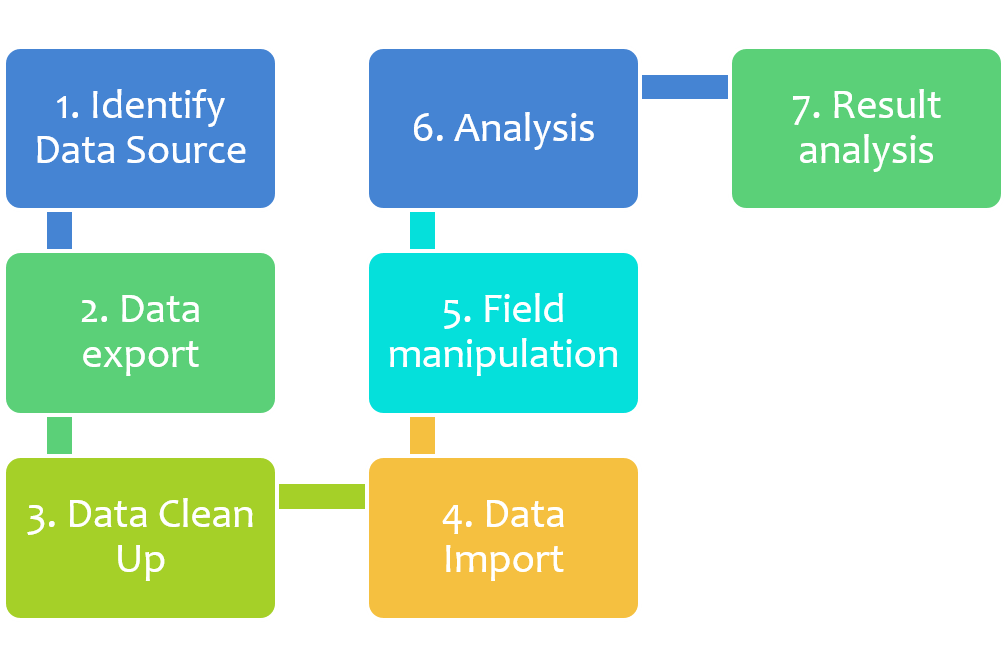
* Identify Data Source: know where your DATA is coming from
*Data export: Get the data exported to you in format that your data analysis tool can import
*Data clean up: Clean up the data before import and separate it from raw data and results folder
*DATA IMPORT: import the data into your data analysis tool
*Field manipulation: Perform the different techniques that need to be done
*Analysis: Review your results
*Result Analysis: Review your results for reporting purposes
Which tools can I use
*IDEA
*ACL
*ACCESS
*EXCEL
*PICALO
*OTHERS
- A Tool is only as good as the user
- Lets Understand our tools, a good tool can perform the following
- Appending
- Joining
- Filed manipulation
- Data procedure testing
Choosing the Right Tool
- Usability – Easy to use
- Comprehensive – Present all data to the analyst
- Audit Log– Steps taken can be seen which were taken
- Deterministic – A tool must produce the same output when given the same rule set and input data.
- Verifiable – To ensure accuracy, one must be able to verify the output by having access to the layer inputs and outputs. Verification can be done by hand or a second tool set.
The Basic Rules when Setting up
- Create two folders (One for original data and the other for results)
One folder will keep your original data so let us call it “Origins” and the next let us call it “Results”
Now that you we have introduced data analysis lets go to the next level.